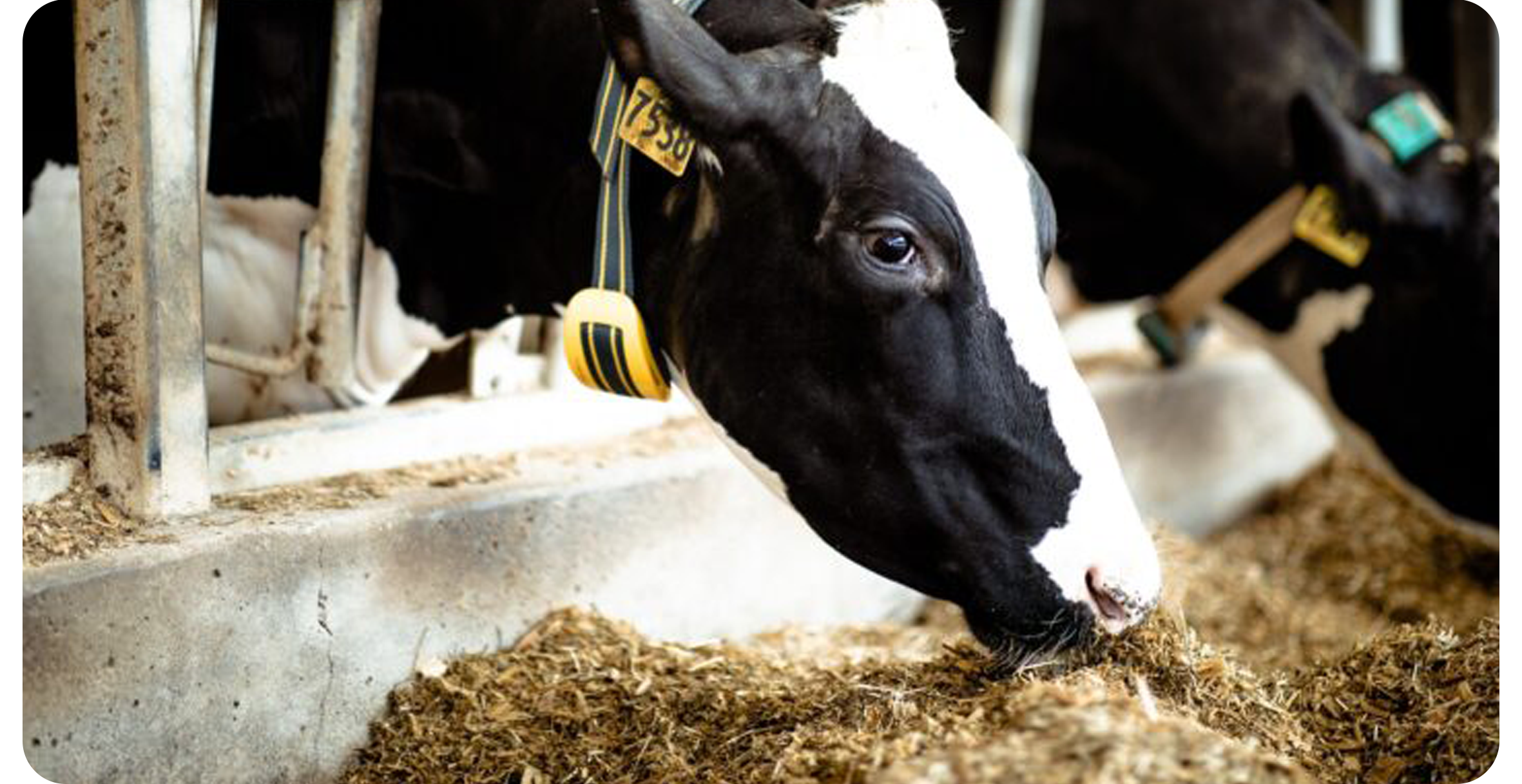
Feed and forage composition naturally change over time. However, excessive variability in nutrient composition can significantly impact dairy farm profitability, ration consistency, rumen health, and milk production.
For this reason, modern dairy farms are increasingly adopting a more data-driven approach to forage and feed management.
When forage nutrient composition is highly variable, nutritionists are often forced to “overformulate” rations as a safety margin against possible nutrient deficiencies.
This approach can increase feed costs and reduce overall feeding efficiency.
Fiber variability is particularly critical in high-production dairy herds:
Maintaining a stable and consistent ration is therefore essential for both animal performance and farm economics.
Research presented by The Ohio State University highlights that day-to-day forage variability can sometimes be as significant as month-to-month variation.
According to researchers, relying on a single feed sample may lead to incorrect ration adjustments caused by normal analytical variation rather than real nutritional changes.
Instead, experts recommend:
This strategy helps avoid excessive ration changes that can negatively affect cow performance and increase feeding costs.
The growing use of NIRS (Near-Infrared Spectroscopy) technology is changing how dairy farms monitor feed quality.
Compared to traditional wet chemistry analysis, NIR technology allows:
While traditional laboratory methods remain highly accurate, NIR systems provide excellent precision and are particularly effective at detecting changes in feed composition quickly.
This makes NIR technology ideal for process control and precision feeding applications on modern dairy farms.
Frequent feed testing allows farmers and nutritionists to:
Some forage parameters, such as ammonia levels in silage, can also help identify fermentation problems that may negatively affect intake, ketosis incidence, and animal health.
Modern dairy nutrition is becoming increasingly dynamic. Feed quality can change rapidly depending on harvest conditions, silage management, storage, suppliers, season, and forage source.
This is why precision feeding increasingly relies on continuous monitoring tools capable of transforming feed analysis into actionable decisions.
Technologies such as portable and real-time NIR analyzers now allow dairy farms to monitor forage variability directly on the farm, helping improve consistency, optimize feeding strategies, and reduce economic losses linked to nutritional variation.
Full article here: Repeated sampling generates the best rations


 NIR & Imaging
 Data Management
 Mobile Apps
 Load Cells
 Indicators and ECU
 Accessories
 English
 Italian
 Spanish
 French
 German
 Portuguese (Brazil)
 Dutch
Dutch Polish
 Chinese (Simplified)
 Turkish
