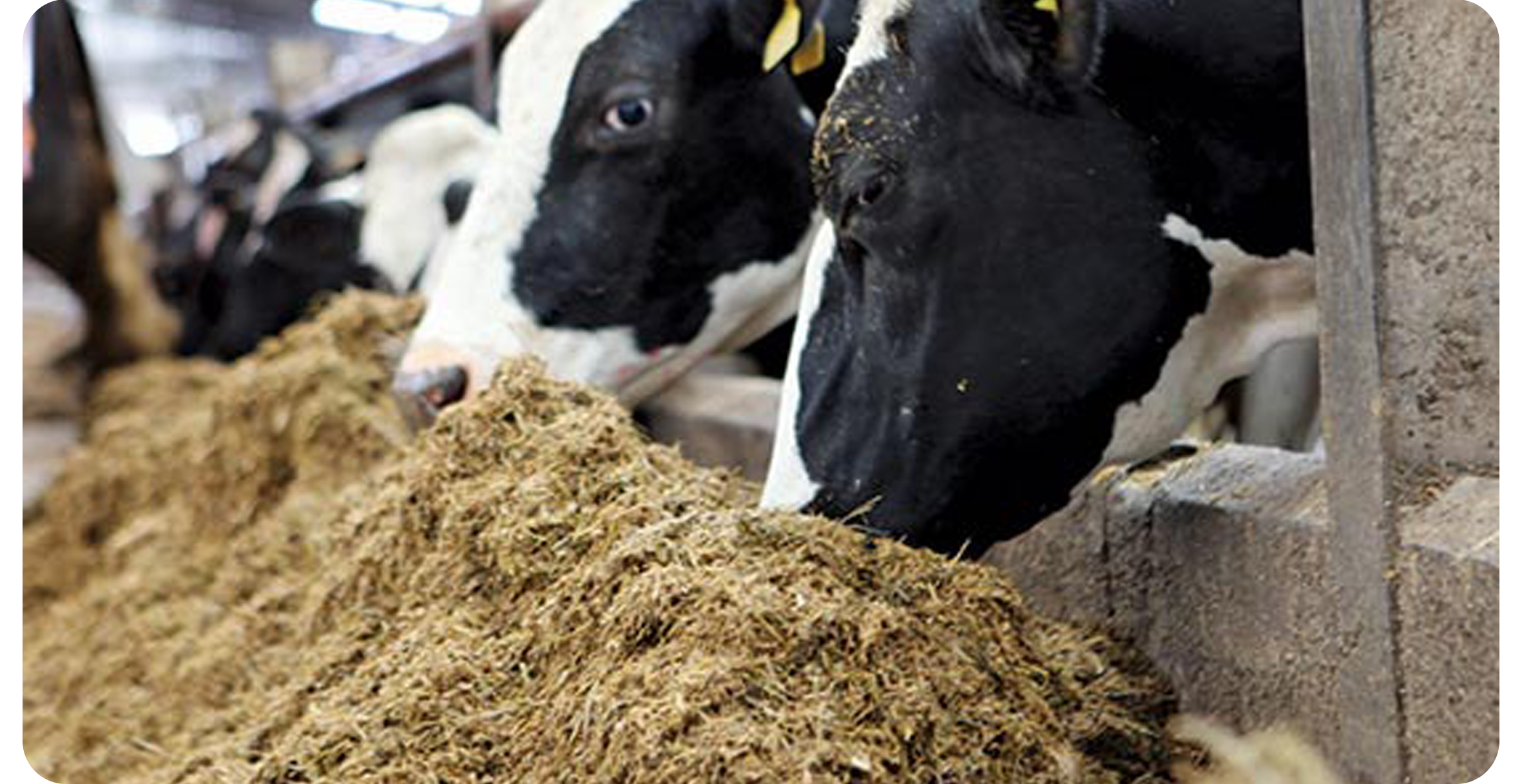
“New and cost-effective technologies now allow dairy farmers to significantly improve the accuracy and precision of feeding,” explains Noah Litherland, assistant professor of dairy cattle nutrition at the University of Minnesota. “Precision Dairy Nutrition is a holistic system concept that allows farms to account for daily fluctuations on the farm.”
A Precision Dairy Nutrition system is based on five main components:
Recently, Litherland and his colleagues investigated the accuracy of a new precision feeding technology that analyzes individual feeds using near infrared spectroscopy (NIR) and automatically adjusts the dry matter content during the mixing process. This technology was compared with the conventional method, in which the dry matter content of the feed is determined weekly using a drying cabinet (control group).
According to results presented at the 2012 Midwest Meeting of the American Dairy Science Association in Des Moines, Iowa, NIR technology – also known as Intelligent Ration Monitoring (IRM) – was just as effective at ensuring consistent TMR quality as traditional dry box methods.
No differences were found between the two test groups in terms of dry matter DMR, starch, crude protein, ADF (acid detergent fiber) and NDF (neutral detergent fiber). Similarly, there were no differences in dry matter intake, fat-corrected milk yield, milk fat content, milk fat yield or feed efficiency. However, the milk protein content was higher in the IRM group.
The conclusion of the study was that cows fed an IRM-adapted ration achieved the same performance as cows whose ration was adapted using traditional dry cow methods.
PDF: Click here


 NIR & Imaging
 Data Management
 Mobile Apps
 Load Cells
 Indicators and ECU
 Accessories
 English
 Italian
 Spanish
 French
 German
 Portuguese (Brazil)
 Dutch
Dutch Polish
 Chinese (Simplified)
 Turkish
