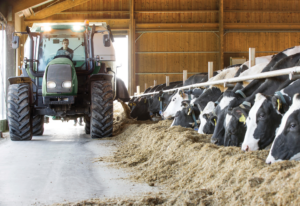
Among the management activities of a dairy farm, feeding management plays a key role in achieving economic profitability. Feeding is the main environmental factor influencing herd health, productivity, and efficiency, while also representing the largest share of milk production costs.
For this reason, the primary goal of every dairy farmer should be to deliver rations capable of supplying exactly the nutrients required by the metabolism of each cow.
The nutritionist supports the farmer by formulating optimal ration plans, tailored to different animal groups and production stages. However, in the transition from the theoretical ration to its practical implementation, a gap often arises, causing the ration actually fed to deviate from the original nutritional targets.
This happens because the chemical and physical characteristics of feeds are rarely constant over time, even within the same feed category. Factors such as:
significantly affect the nutritional profile of forages. For example, corn silage stored in horizontal bunkers will always show different dry matter contents across the feeding face.

This variability directly impacts the loading phase of the feed mixer, where the actual nutrient quantities loaded may fall outside the limits defined by the nutritionist—often without the farmer being aware of it.
To obtain uniform and consistent rations over time, two conditions are required:
While the first condition can be partially addressed through good agronomic practices, the second requires real-time monitoring tools.
Near Infrared Spectroscopy (NIR) is a physical analytical method based on the absorption of electromagnetic radiation. The analytical signal depends on the chemical and physical properties of the sample, which partially absorbs, reflects, and transmits the incident radiation.
In the 780–2500 nm spectral range, NIR radiation is mainly absorbed by C-H, O-H, N-H, P-H, and S-H bonds, enabling quantitative analysis of:
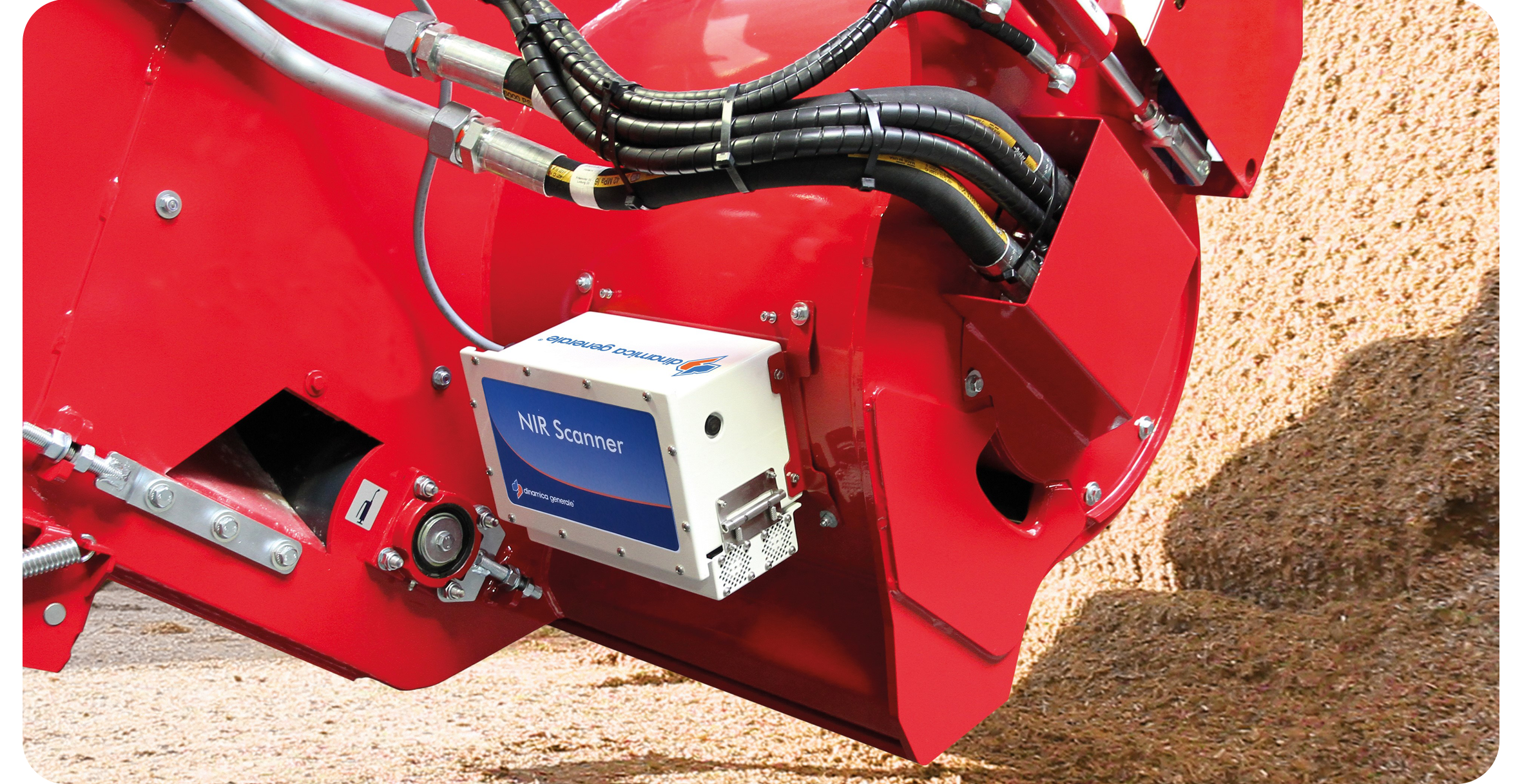
Today, NIR sensors can be installed directly on the milling head of the feed mixer, enabling continuous feed analysis during loading operations.
By knowing in real time the contents of:
it becomes possible to monitor the actual nutrient quantities forming the TMR and adjust the ration in real time, closely matching the nutritionist’s formulation.

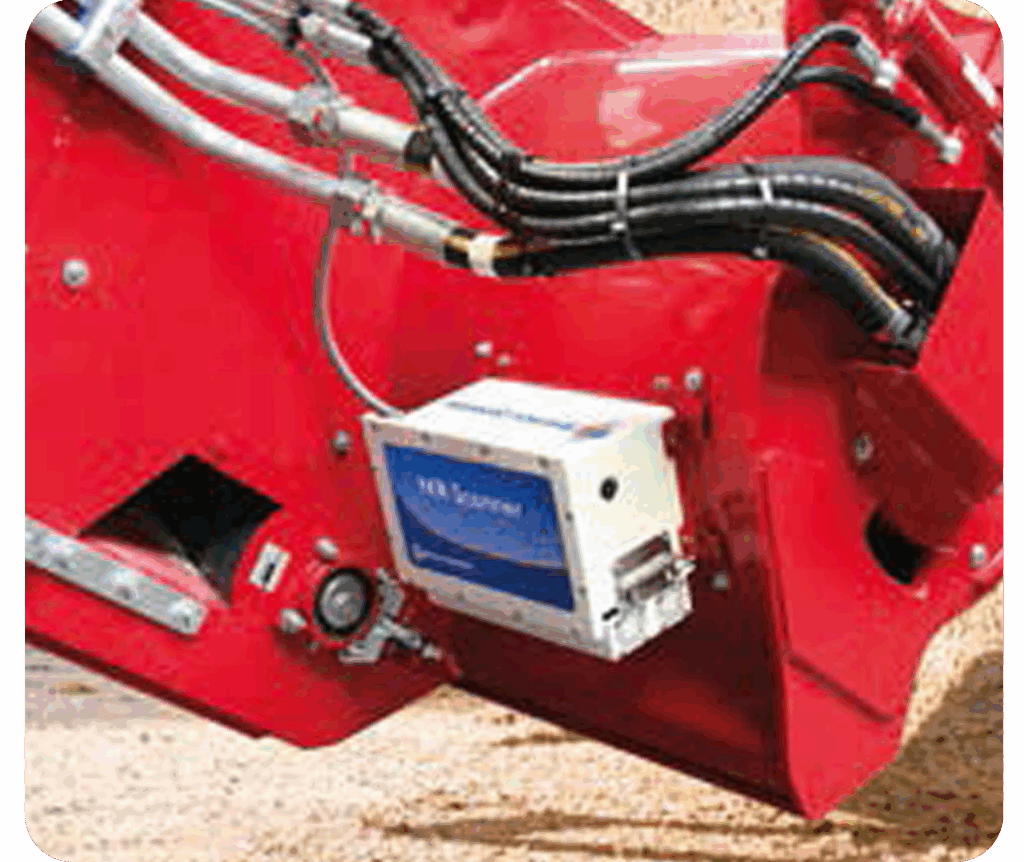
Among the solutions currently available, the Precision Feeding system by Dinamica Generale represents a complete and integrated approach.
The system consists of:
The system operates by setting default nutritional values for each ingredient based on laboratory reference analyses. These values are managed by the DTM software, accessible in multi-user mode, including nutritionists.
The formulated rations are transmitted wirelessly to the weighing indicator installed on the mixer, which guides the operator in real-time adjustments based on the NIR sensor measurements.
The adoption of these technologies allows:
Field experience has shown average increases of +0.6 kg of milk per cow per day following the introduction of NIR sensors on feed mixers.
Beyond nutritional control, Dinamica Generale has developed Visiomix, a system based on computer vision technology that visually analyzes the TMR inside the mixer.
Visiomix measures:
The system automatically adjusts the mixing process until the optimal homogeneity and fiber length are reached.
Visiomix was awarded the EuroTier Innovation Award 2016.
Data collected during the Filigrana project showed an average economic improvement of +€4 per 100 kg of milk produced.
By Alberto Borile


 NIR & Imaging
 Data Management
 Mobile Apps
 Load Cells
 Indicators and ECU
 Accessories
 English
 Italian
 Spanish
 French
 German
 Portuguese (Brazil)
 Dutch
Dutch Polish
 Chinese (Simplified)
 Turkish
