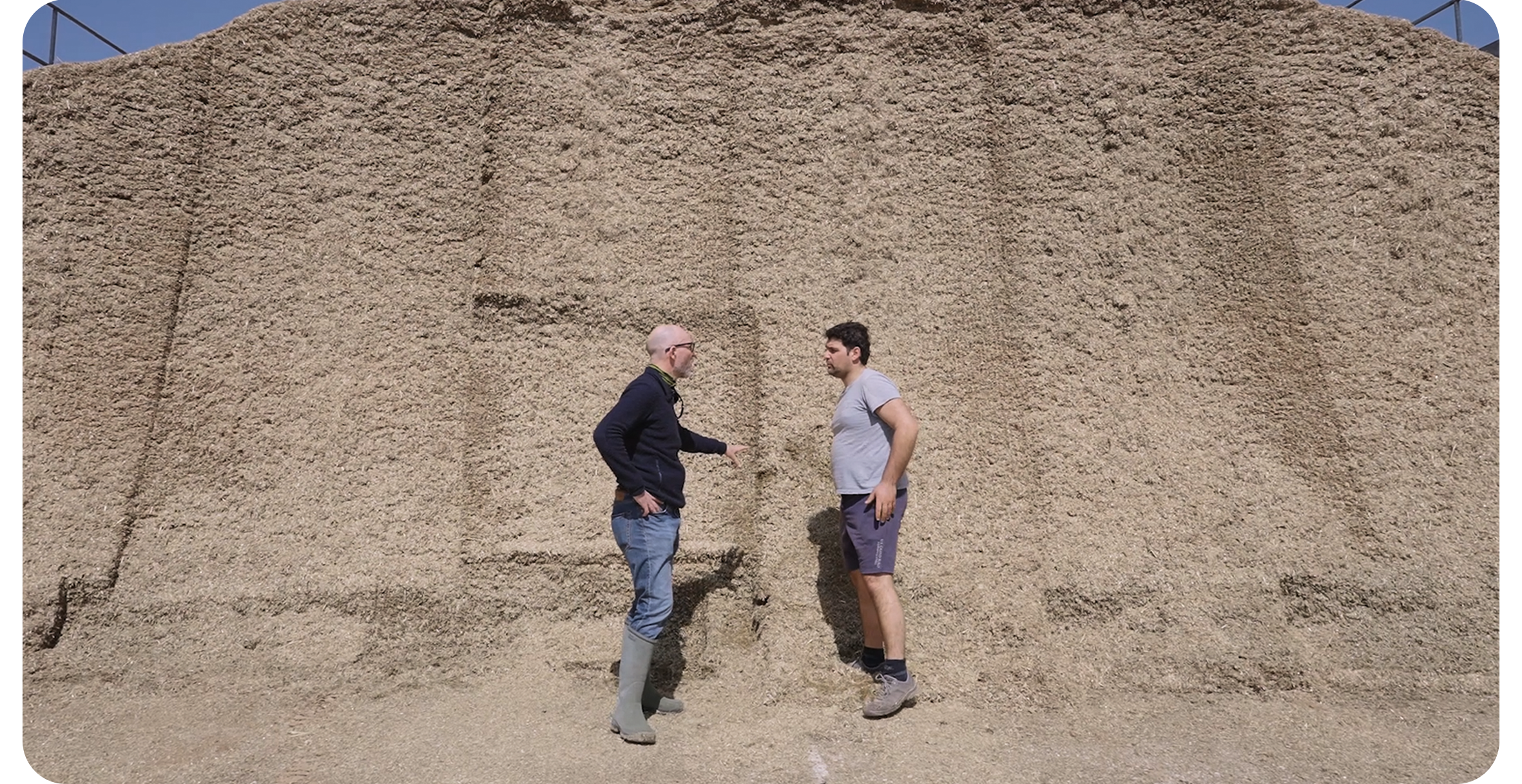
In dairy farming, feed stock management plays a crucial role in controlling production costs and improving overall efficiency.
Feed represents one of the highest cost items on a dairy farm, and poor control of feed stocks often leads to hidden losses before feed even reaches the feed bunk.
As farms grow larger and more complex, managing feed stocks without data and structured control becomes a major economic weakness. A clear, measurable feed stock management strategy is essential to reduce waste and protect farm margins.
In the video linked to this article, Cristian Rota explains how feed stock management directly impacts feeding efficiency and farm profitability.
The most common problem in dairy farms is the lack of conscious feed stock management.
Many farms:
Without proper feed stock control, farms cannot identify inefficiencies or take corrective actions.
When feeding costs account for such a large share of total expenses, losing control of feed stocks means losing money without realizing it.
According to Cristian Rota, feed waste is one of the largest and least visible cost drivers in dairy farming. Between what enters the farm and what actually reaches the feed bunk, losses can reach 7–10%.
These losses often remain unnoticed but have a significant impact on farm profitability.
Feed losses may originate from:
Different feeds show different loss rates, which makes targeted feed stock management even more important.
Reducing feed waste does not mean eliminating losses completely, as some losses are unavoidable.
However, farms must measure, monitor, and manage feed losses.
Effective feed stock management requires farms to:
Conducting routine feed stock inventories allows farms to compare expected data with reality and take data-driven corrective actions.
A structured feed stock management approach delivers immediate benefits.
Economic benefits include:
Quality benefits include:
As Cristian Rota highlights, the real issue is not the lack of tools, but the fact that many farms do not fully use them. Feed stock management often receives less attention than it deserves.
Feed stock management is not a secondary task, but a strategic lever for efficiency and profitability in dairy farming. By improving feed stock control, dairy farms can:
Before optimizing feed bunk management, farms must first gain full control of their feed stocks.
Watch the full video, click here!


 NIR & Imaging
 Data Management
 Mobile Apps
 Load Cells
 Indicators and ECU
 Accessories
 English
 Italian
 Spanish
 French
 German
 Portuguese (Brazil)
 Dutch
Dutch Polish
 Chinese (Simplified)
 Turkish
