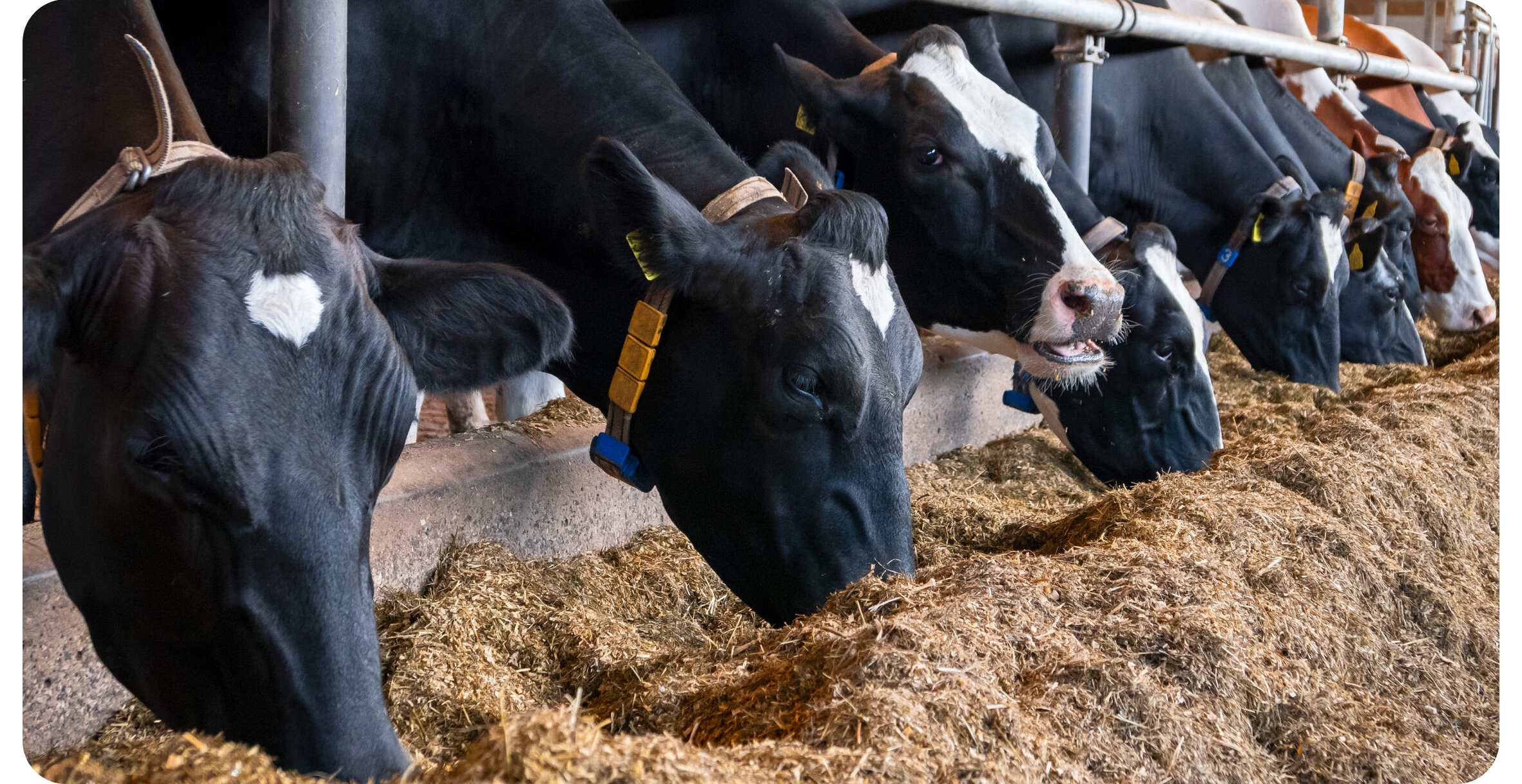
Feed variability is one of the most underestimated factors affecting dairy farm productivity, feed efficiency, and profitability.
According to research from The Ohio State University, uncontrolled variation in feed composition can reduce milk production, increase feeding inefficiencies, and negatively impact overall herd performance.
Modern precision feeding strategies focus on reducing this variability through better feed management, frequent forage analysis, and more consistent Total Mixed Rations (TMRs).
Researchers identify two major types of diet variability:
Both types of variation can create inconsistencies in the nutrients delivered to the cows every day.
Even small changes in nutrient composition can affect:
Variations in crude protein, NDF, starch, and dry matter may lead to inconsistent cow performance and lower feeding accuracy.
For this reason, maintaining a consistent TMR has become a key objective for modern dairy farms.
The study highlights that feed analysis should not rely on occasional single samples.
Instead, dairy operations should:
Frequent feed analysis helps reduce uncertainty and improves ration formulation reliability.
Several management practices can help reduce feed variation, including:
The research also shows that diets formulated with multiple ingredients tend to have lower variability compared to diets relying heavily on a single feed ingredient.
Portable NIR analyzers and real-time feed analysis technologies are becoming essential tools for controlling feed variability on dairy farms.
Solutions such as AgriNIR™ and X-NIR™ by Dinamica Generale allow farmers and nutritionists to rapidly measure:
This makes it possible to adjust rations immediately and maintain more consistent nutrient delivery to the herd.
The research concludes that reducing diet variation can significantly improve dairy farm economics.
More consistent diets help optimize nutrient utilization, stabilize milk production, and reduce hidden feeding costs associated with ration variability.
For modern dairy farms, controlling feed variation is no longer optional, it is a key component of profitable precision feeding programs.


 NIR & Imaging
 Data Management
 Mobile Apps
 Load Cells
 Indicators and ECU
 Accessories
 English
 Italian
 Spanish
 French
 German
 Portuguese (Brazil)
 Dutch
Dutch Polish
 Chinese (Simplified)
 Turkish
