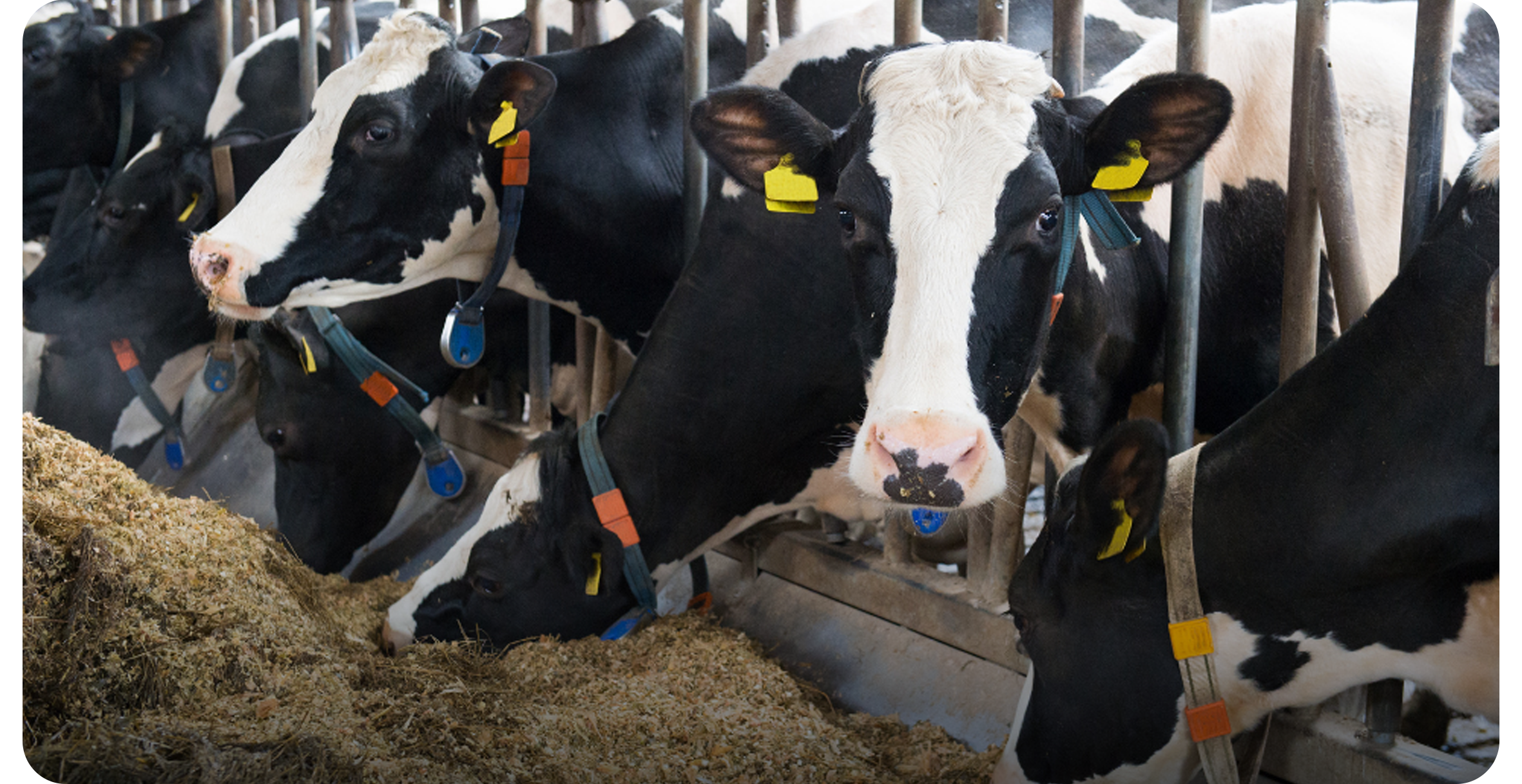
Dairy cow nutrition is the result of a complex balance between ration formulation, rumen health, milk production, and fertility. Recent scientific research highlights how even small changes in diet composition can significantly impact animal performance and reproductive efficiency.
This article, presented in Kansas City during a major international scientific meeting, summarizes the findings of several peer-reviewed studies focused on key topics such as dietary starch levels, DCAD, water quality, and ration composition. The data provide valuable insights for improving feeding strategies and supporting more efficient and sustainable dairy farm management.
Download the full article in PDF to explore the complete research data and scientific analyses.
Below, you will find a concise summary of the main results and take-home messages, designed for a quick and practical reading.
The article summarizes several scientific studies presented in Kansas City during a major dairy nutrition conference, highlighting how ration formulation strongly affects milk production, rumen health, and fertility.
A meta-analysis of 56 studies shows that reducing starch in the diet (replaced by nonfiber carbohydrates, forage, or sugars) leads to:
Key takeaway: when starch levels are reduced due to high feed costs, fermentable carbohydrates must be carefully balanced. Excessive starch, however, increases the risk of rumen acidosis.
A review of 44 studies indicates that increasing DCAD:
Key takeaway: DCAD is a powerful nutritional tool, particularly under heat stress conditions.
Data from 49 freestall herds show that:
Key takeaway: excessive dietary energy can impair reproductive performance, while adequate fiber supports fertility.
An in vitro study demonstrates that:
Conclusion: dairy cow nutrition is highly complex and must be carefully balanced to optimize production, rumen function, and reproductive performance.


 NIR & Imaging
 Data Management
 Mobile Apps
 Load Cells
 Indicators and ECU
 Accessories
 English
 Italian
 Spanish
 French
 German
 Portuguese (Brazil)
 Dutch
Dutch Polish
 Chinese (Simplified)
 Turkish