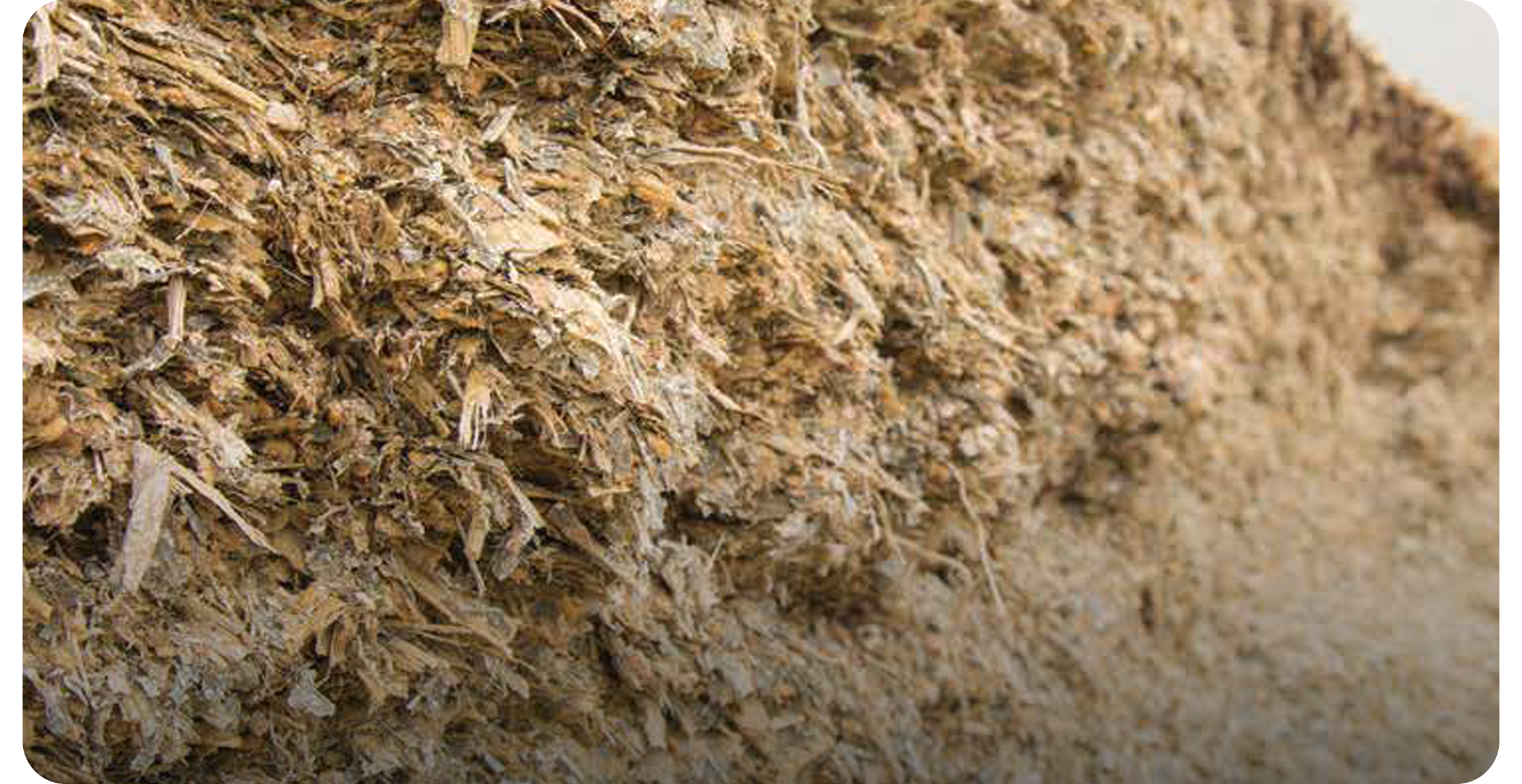
Knowing what’s in your bunker is essential to developing your ration strategy. When inaccuracies exist, cows and your entire feed budget ultimately take the hit.
by John Goeser
ON-FARM forage and feed inventories are a revolving discussion for management and consulting teams. Forage inventory largely dictates a dairy’s nutrition strategy while providing equity for the balance sheet. Truck scales and feed management software programs are exceptional tools for handling inventory in real time. Similar to a local gas station or grocery store continuously recording product inventory, a dairy can and should have a real-time record of both inventory and its economic value.
Accuracy hinges on dry matter. Truck scales add vendor accountability by physically weighing (recording) the feeds being delivered as well as weighing harvested forage loads into inventory. In concert, feed software programs then use scale-head feedout measures for various ingredients to debit against entered inventory. The result is a continuously up-to-date inventory. Scales and software improve farm profit margins by enhancing the precision and accuracy within nutrition and feeding programs. Furthermore, we can assess feed shrink, a costly loss which is often unrecognized. However, accurate measures must be entered into inventory. Accuracy hinges on correct dry matter content or, conversely, moisture. What if dry matter estimates are different by even one unit from reality? The impact on feed inventory is substantial. Measuring dry matter content once per day is no easy task, let alone measuring it tens or hundreds of times during harvest across all wagons or truckloads entering the feed center and then recording the data. Personal experience suggests dry matter between loads or f ields may differ by five to 10 units.
Accurately determining dry matter content average for an entire crop is extremely difficult. The firsthand experience of one Wisconsin dairy recently demonstrated the level of difficulty associated with dry matter determination during harvest. Unfortunately, the results led to inventory shortages and elevated feed costs. The 1,200-cow dairy measured and recorded all scale weights corresponding to last year’s corn silage harvest. Spot dry matter measures from trucks crossing the scale suggested the crop averaged 32 percent dry matter, and the team estimated dry matter inventory at nearly 3,600 dry tons (see table) for inventory and feed management planning purposes. During feedout, more frequent feed testing revealed the crop was actually at 28 percent dry matter content, substantially diminishing corn silage dry matter tons in inventory. The dairy recognized nearly 50 days less feed was available and needed to make drastic nutrition changes, incorporating forage replacing byproducts, to stretch feed inventory to new the crop. At approximately $200 per ton for the byproducts, this missing inventory amounted to over $100,000 in purchased feed costs. Note that this real example also incorporates forage shrink which will be discussed more in the future. As mentioned previously, shrink is difficult to measure without gathering accurate moistures both during harvest and feedout. Under optimal management, fermentation shrink will consume about 5 percent of harvested tons (sugar and fermentable nutrients) but can approach 25 percent with poor harvest and storage practices.
Moving forward, the dairy will be taking many more dry matter measures within and across trucks crossing the scale. Experts recommend several measures within a load (truck or wagon), and then at a minimum every other load that crosses the scale should be checked. Novel rapid dry matter determination tools that can gather and record several dry matter measures within minutes are now readily available. Arranging for an employee to work in the scale room, with the sole responsibility of measuring and recording dry matter and load weights, can have valuable results for a dairy. Beyond harvest and correctly measuring crop dry matter content, Bill Weiss and colleagues at the Ohio State University found moisture often varies by 2 to 3 units in day-today feedout measures. Weather events, as well as inherent silo dry matter variability, cause these swings. Dry matter content during feedout should be monitored more often (every other day or daily) than currently observed on many farms.
Dairy cattle are creatures of habit, and accurately measuring dry matter to take full advantage of feed management programs and provide a consistent TMR will continue advancing dairy performance and profitability.


 NIR & Imaging
 Data Management
 Mobile Apps
 Load Cells
 Indicators and ECU
 Accessories
 English
 Italian
 Spanish
 French
 German
 Portuguese (Brazil)
 Dutch
Dutch Polish
 Chinese (Simplified)
 Turkish