menu
search

Search our website

FAQ

What is a load cell and why is it used in agriculture?

A load cell is a sensor that measures weight by converting a mechanical force into an electrical signal. In agriculture and livestock farming, load cells are essential for accurately weighing feed, grains, silage, fertilizers, and other materials, helping farmers and machine operators improve efficiency and reduce waste.

How does a load cell work?

A load cell works through the controlled deformation of a metal body equipped with strain gauges. When a load is applied, the strain gauges change their electrical resistance. This variation is converted into a low-level electrical signal proportional to the applied weight and processed by a weighing indicator or control unit.

What types of load cells are used in agricultural machines?

Agricultural applications typically use:
  • Compression load cells for high-capacity and heavy-duty machines
  • Bending beam load cells for feed mixers and trailers
  • Spindle (pin) load cells integrated into structural parts
The choice depends on machine design, capacity, and installation requirements.

Which load cells are suitable for feed mixers?

Feed mixers require load cells that combine high accuracy with mechanical robustness. They must withstand vibrations, shocks, and harsh environments while ensuring stable and repeatable weight measurements, which are critical for precise ration preparation.

What affects the accuracy of a load cell system?

Load cell accuracy depends on several factors:
  • Mechanical design and material quality
  • Strain gauge configuration
  • Temperature compensation
  • Correct mechanical installation
  • Cable shielding and signal integrity
The machine structure and load distribution also play a key role.

How do temperature changes affect load cell measurements?

Temperature variations can influence both the mechanical and electrical behavior of a load cell. High-quality agricultural load cells include temperature compensation to ensure reliable measurements across a wide operating range typical of outdoor and farm environments.

What does IP67 or IP68 protection mean for load cells?

The IP rating defines resistance to dust and liquids:
  • IP67: fully dustproof and protected against temporary immersion
  • IP68: suitable for continuous immersion
For agricultural use, high IP protection is essential to resist moisture, slurry, fertilizers, and frequent washing.

Why is correct mechanical installation so important?

Incorrect installation can introduce lateral forces, torsion, or uneven load distribution, leading to measurement errors and premature wear. Proper mounting ensures accurate readings, long service life, and consistent system performance.

Can multiple load cells be connected in one weighing system?

Yes. Agricultural machines often use multiple load cells connected through a junction box. This allows signal balancing between weighing points and ensures accurate total weight measurement across the entire machine.

Does Dinamica Generale supply load cells for OEM and aftermarket applications?

Yes. Dinamica Generale designs and manufactures load cells for both OEM and aftermarket agricultural applications. The company offers standard and custom solutions, supporting customers with technical drawings, reverse engineering, and full integration with weighing electronics and digital farm systems. In Dinamica Generale’s product portfolio are available different models of load cells: mobile, compression, flat, spindle, etc.

For which agricultural machines does Dinamica Generale supply load cells?

Dinamica Generale designs and manufactures load cells for a wide range of agricultural and livestock machines, both for OEM and aftermarket applications. Its solutions are specifically developed for machines such as:
  • Feed mixers (trailed, self-propelled, stationary)
  • Grain carts
  • Seed tenders
  • Balers
  • Forage wagons
  • Manure spreaders
  • Mineral and fertilizer spreaders
  • Agricultural trailers and transport wagons
Each load cell is engineered to match the mechanical structure, load capacity, and operating conditions of the machine, ensuring reliable weight measurement, long-term durability, and seamless integration with weighing indicators and digital farm systems.

What is NIR technology and how does it work?

NIR (Near Infrared Reflectance) technology analyzes materials by measuring how they reflect near-infrared light. When infrared light hits a product, part of it is absorbed and part is reflected. The reflected spectrum is processed through calibration models to determine the chemical composition of the material in real time.

What parameters can be measured with a NIR sensor in agriculture?

NIR sensors can measure key nutritional and compositional parameters such as:
  • Dry Matter (DM)
  • Moisture
  • Protein
  • Fiber (NDF, ADF)
  • Starch
  • Ash
  • Ph
  • N
  • P
  • K
  • etc
These values are essential for feed quality control, ration accuracy, and process optimization.

Why install a NIR sensor directly on agricultural machines?

Installing a NIR sensor directly on the machine allows real-time analysis, eliminating delays and sampling errors typical of laboratory testing. Operators can immediately react to variations in raw materials, improving accuracy, efficiency, and consistency during daily operations.

What are the main benefits of on-machine NIR analysis?

On-machine NIR technology provides:
  • Immediate decision-making based on real data
  • Reduced feed variability and waste
  • Improved process control
  • Higher nutritional consistency
  • Better economic performance
It transforms agricultural machines into smart, data-driven equipment.

How is NIR used on forage harvesters and combines?

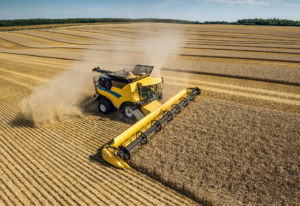
On forage harvesters and combines, NIR sensors continuously analyze the harvested material during operation. This allows monitoring crop quality, dry matter, and nutrient variability directly in the field, supporting yield mapping, logistics planning, and more accurate feed management downstream.

What is the role of NIR technology on slurry tankers?

When installed on slurry tankers, NIR sensors measure nutrient content (dry matter, N, P, K) in real time during spreading. This enables more precise nutrient application, better compliance with environmental regulations, and optimized fertilization strategies based on actual slurry composition.

How is NIR applied on feed mixers (self-propelled and trailed)?

EVONIR analyzer can be installed both on self-propelled and trailed feed mixer.
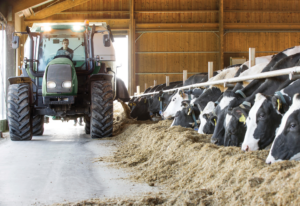
  • Self-propelled:  The NIR sensor is installed on the feed mixer cutter and performs real-time analysis of the material, automatically adjusting the loading quantity of each ingredient based on the measured values.
  • Trailed: The sensor is installed on the feed mixer tub and allows the analysis of TMR quality and mixing homogeneity. This provides clear indications of the overall quality of the mixed ration.
All collected data are transmitted to the DTM feeding management software for further analysis and monitoring.

Why is NIR on feed mixers a key technology for precision feeding?

NIR sensors on feed mixers enable:
  • Immediate correction of ingredient variability
  • Consistent ration quality day after day
  • Reduced feed costs
  • Improved animal performance
This makes NIR a core technology for true precision feeding strategies.

Which NIR solutions does Dinamica Generale offer for agricultural machinery?

Dinamica Generale develops NIR solutions designed for integration on a wide range of agricultural machines, including forage harvesters, combines, slurry tankers, forage wagons, balers, and feed mixers. These sensors are engineered for harsh environments and seamless integration with weighing systems, ISOBUS, and farm management software, enabling real-time data collection and smarter agricultural operations.

How is NIR technology used in in-line and process installations?

Dinamica Generale also provides in-line NIR solutions for industrial and agro-processing plants where continuous, real-time analysis is required. Today, NIR sensors are installed on:
  • Alfalfa drying plants
  • Oil mills
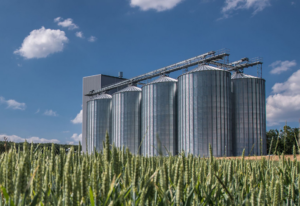
  • Cereal elevators
  • Dairies and cheese factories
In these applications, the NIR sensor analyzes the product directly on the process line, delivering real-time compositional data without interrupting production. The measured parameters are integrated into the plant control system (PLC, SCADA, or central control unit) and can be used to enable closed-loop control strategies. Based on the NIR analysis, automatic feedback actions can be implemented to:
  • Adjust drying temperature and residence time
  • Optimize milling or extraction processes
  • Control blending, dosing, or separation phases
  • Improve product consistency, efficiency, and energy consumption
This approach transforms NIR from a monitoring tool into an active component of process optimization and industrial automation.

Why is a weighing system essential on a feed mixer and what solutions does Dinamica Generale offer?

An accurate weighing system is essential on a feed mixer to ensure precise ingredient loading, consistent ration preparation, and effective feed cost control. Without a reliable weighing system, true precision feeding is not achievable. Dinamica Generale offers a complete range of weighing indicators for feed mixers, from basic solutions like the DG400 to advanced control units such as the DG8000 IC, covering different levels of functionality, automation, and connectivity.

What are the main technical specifications of Dinamica Generale weighing indicators?

Dinamica Generale weighing indicators are designed for agricultural use and feature high-resolution signal processing, digital filtering for dynamic conditions, support for multiple load cells, sealed housings for harsh environments, and interfaces for external devices and machine integration. Specifications vary depending on the model, allowing users to choose the right level of performance and functionality.

Can Dinamica Generale weighing indicators be connected to DTM feeding software?

Yes. Depending on the model, Dinamica Generale weighing indicators can transmit feeding and weighing data to the DTM feeding management software. This enables data traceability, reporting, performance analysis, and integration of machine data into a broader digital feeding workflow.

Are Dinamica Generale weighing indicators available for OEM and aftermarket installations?

Yes. Dinamica Generale weighing indicators are designed for both OEM integration on new feed mixers and aftermarket installation on existing machines. This flexibility allows manufacturers, dealers, and farmers to adopt or upgrade weighing systems according to their needs.

Which accessories can be connected to Dinamica Generale weighing indicators?

Depending on the indicator model, various accessories can be connected, including mobile apps for remote monitoring, remote or auxiliary displays, and systems for automating loading and unloading operations. This modular approach allows the weighing system to evolve from a basic setup to an advanced, automated solution.

How do Dinamica Generale weighing indicators ensure stable and accurate measurements during mixing?

Feed mixers operate under highly dynamic conditions with vibrations, movement, and variable loads. Dinamica Generale weighing indicators use advanced digital filtering and signal processing algorithms to stabilize weight readings while maintaining fast response times during loading and mixing phases.

Can Dinamica Generale weighing indicators work with load cells from different manufacturers?

Yes. Dinamica Generale weighing indicators are designed to be compatible with most standard load cells available on the market. This allows them to work with different brands and models of load cells, making them suitable for both new installations and retrofitting existing feed mixers.

What solutions does Dinamica Generale offer for machines operating in the field?

Dinamica Generale provides weighing and control solutions for a wide range of in-field agricultural machines, including grain carts, balers, forage wagons, seed tenders, manure spreaders, and mineral spreaders. These solutions consist of weighing indicators or ECUs designed to connect load cells and communicate with the machine through ISOBUS or CAN J1939, allowing weight data and functions to be displayed directly on the machine’s virtual terminal.

What is SensorLOGIC and where can it be installed?

SensorLOGIC is an Electronic Control Unit (ECU) designed to directly connect up to four load cells and interface with the machine via ISOBUS or CAN J1939 to the virtual terminal. Thanks to the possibility of developing dedicated weighing algorithms, SensorLOGIC can be installed on different types of agricultural machines, such as balers, mineral spreaders, forage wagons, and other in-field equipment, adapting the weighing logic to each specific application.

Is there a weighing ECU with integrated Bluetooth for grain cart applications?

Yes. The DG400 ECU features integrated Bluetooth Low Energy (BLE) communication and can connect directly to the FIELD scale app. This solution allows operators to monitor and manage all grain cart weighing operations directly from a mobile device, providing real-time weight data, load tracking, and improved traceability without the need for additional displays in the cab.